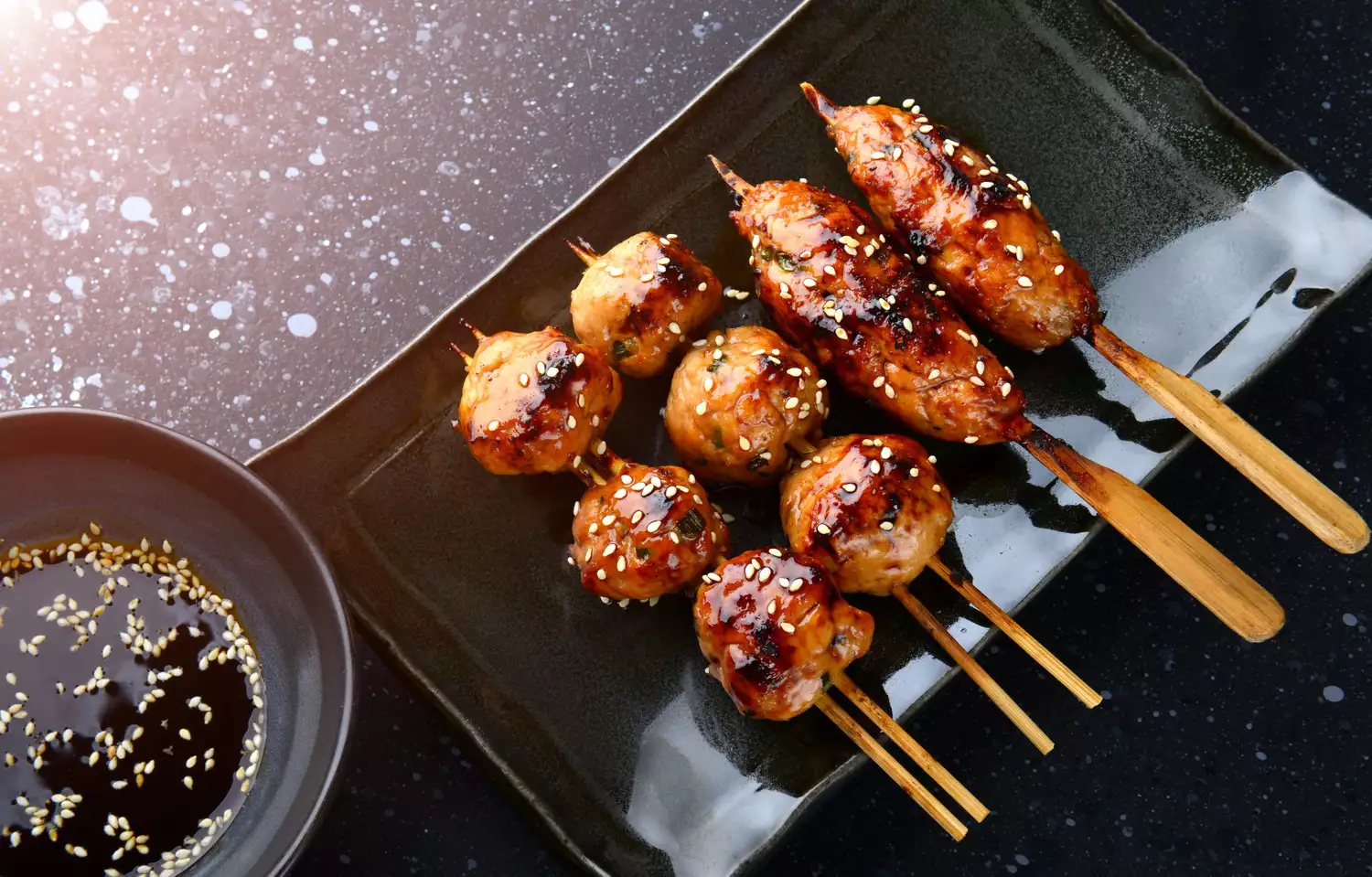
This traditional Japanese dish has become increasingly widespread in the United States. Here is everything you need to know about how to order yakitori and make it at home. Yakitori can be literally translated as “grilled chicken”, from the Japanese words yaki (grill) and tori (chicken). Yakitori consists of bite-sized pieces of meat (usually chicken) served on a bamboo skewer. In Japan, yakitori can be street food or a casual meal served in a lounge, often with Japanese beer or sake. In America it is becoming trendy in restaurants, where chefs use every part of the chicken for skewers and get creative with other proteins and foods. It has also begun to catch on in homes, especially at dinner parties, where the experience of cooking a shared dinner over a hot grill offers a unique adventure and an unusual technique for bringing dinner to the table. Read on to find out what yakitori is, how it is made, and how you can make it the centrepiece of your next dinner party or family meal. How is yakitori made? At the heart of yakitori is a small rectangular grill just a few inches deep. In restaurants, chefs often prepare the dishes tableside or at a central grill surrounded by bar stools. Traditional yakitori is always cooked over binchotan, which is Japanese white charcoal. This heat source burns very cleanly, so it adds no flavour to the chicken skewers; all the charred flavour comes from contact with the hot grill. If binchotan is not available, a similarly flavour-neutral charcoal or briquette fuel can be used. The grill burns low, at around 100 degrees, so the meat cooks slowly. The chef stands at the grill constantly, turning the meat and letting it simply be kissed by the flames from below. This ever-present chef’s job is also to monitor the moisture level of the meat and adjust it with the house sauce, which is called tare. Besides high-quality ingredients, it is this soy-based sauce, tare, that gives yakitori its flavour. Every restaurant has its own special tare recipe, which creates its own flavour for the yakitori. The ingredients of tare include Japanese rice wine (mirin), onions, ginger, sugar, soy sauce, sake and spices. During grilling, the skewers are dipped in the tare and returned to the grill. Just before being served to customers, they are dipped again or brushed with tare. This final dip gives the chicken a lacquer-like finish that is sweet and salty, yet still subtle enough for the flavour of the chicken to shine through. How did yakitori become so popular? The popularity of yakitori in the United States can be attributed in part to food personalities such as Anthony Bourdain and David Chang. Both men featured yakitori dishes on their television shows “No Reservations” and “Ugly Delicious”. Bourdain described a yakitori meal in detail, right down to the drops of chicken fat, in his book Medium Raw. World-famous Japanese chefs such as Yoshiteru Ikegawa are opening restaurants in the United States, which is sparking interest in this traditional Japanese dish among high-end restaurants. Meanwhile, popular Japanese yakitori chains such as Toritetsu and Tori Jiro have made plans to build more affordably priced restaurants in the USA. The small footprint of a yakitori kitchen and the solid margins on ingredients also make yakitori attractive to chefs and restaurateurs looking to capitalise on food trends. https://www.youtube.com/watch?v=cvR4DYEKlD8&ab_channel=TravelThirsty https://misafoods.eu/product/yakitori-broileri-rinnafilee-tukid-30g-sojakastmega-grillitud-1500g-halal/